
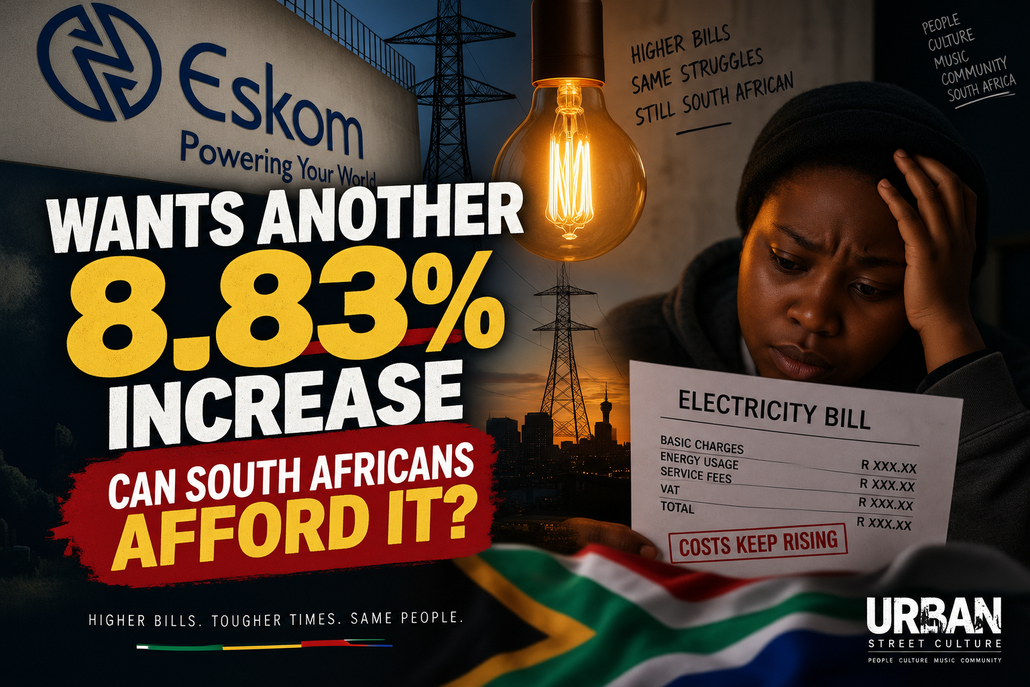
Eskom Wants Another 8.83% Increase — Can South Africans Afford It?
Last updated: 8 September 2026
South Africans could be paying even more for electricity in 2027, and the latest proposed Eskom tariff increase is already raising questions about how much more households can realistically absorb.
The headline figure is 8.83% for the 2027/28 financial year.
For a country where households are already juggling food, rent, transport, school costs and other monthly expenses, another electricity increase is unlikely to feel small.
And that’s exactly why the latest Eskom tariff process has attracted criticism.
How Much Is Eskom Electricity Going Up?
Eskom’s average electricity price is set to move from 240.28 cents per kWh to 261.50 cents per kWh under the 2027/28 tariff path.
That’s an increase of 21.22 cents per unit.
However, the important thing to understand is that 8.83% is an average. It does not mean every South African household will see exactly 8.83% added to their electricity bill.
The amount customers actually pay will depend on their tariff category, electricity consumption and whether they buy electricity directly from Eskom or through a municipality.
When Will the Eskom Increase Start?
The tariff changes are expected to affect customers at different times.
Direct Eskom customers: 1 April 2027
Municipal customers: 1 July 2027
That means many households will experience the impact at different points during the year depending on who supplies their electricity.
Why Are South Africans Concerned?
The biggest issue isn’t simply the percentage.
It’s the fact that electricity is one of those expenses households cannot easily cut out.
You can reduce restaurant trips. You can cancel a streaming subscription. You can delay buying new clothes.
But you still need electricity to cook, keep food refrigerated, charge your phone, study, work and run your home.
For people already living close to the edge of their monthly budget, another increase can mean having to cut back somewhere else.
Businesses face the same problem.
Higher electricity costs can increase operating expenses for everything from small shops and restaurants to manufacturers and offices.
Those costs can eventually filter through to consumers.
Eskom’s Financial Turnaround Adds Another Layer
The proposed increase is also arriving at a time when Eskom’s financial position has improved.
The power utility has reported consecutive profitable years following years of severe financial pressure.
That has led to an obvious question from critics:
If Eskom’s finances are improving, why should consumers continue absorbing above-inflation electricity increases?
Eskom’s position is more complicated.
The utility still needs revenue to maintain its infrastructure, operate the electricity system and improve the reliability of South Africa’s power supply.
That creates a difficult balancing act.
South Africa needs a financially sustainable Eskom — but it also needs electricity that ordinary households and businesses can afford.
What About Inflation?
The proposed electricity increase is particularly sensitive because it comes against a backdrop of relatively low headline inflation but weak economic growth and extremely high unemployment.
An electricity increase can also have a wider economic effect.
When electricity becomes more expensive, businesses may face higher costs. Households then potentially face higher prices for goods and services.
That means the real impact of an electricity tariff increase can extend beyond the amount appearing on your prepaid meter or monthly bill.
NERSA Wants South Africans to Have Their Say
The National Energy Regulator of South Africa (NERSA) is currently taking public comments on Eskom’s proposed tariff structure.
The deadline for written submissions is:
2 October 2026 at 4PM.
NERSA is expected to make its decision on 26 November 2026.
So, for now, South Africans should not treat the 8.83% figure as a new bill amount that has already been imposed on every household.
The regulatory process still matters.
What Does an 8.83% Increase Mean for Your Electricity Bill?
The simplest way to understand the impact is to look at consumption.
If the underlying electricity cost increases, households using more electricity will generally have greater exposure to the increase.
But tariff structures are more complicated than simply multiplying your current bill by 1.0883.
Different customers can have different:
- Electricity tariffs
- Fixed charges
- Municipal mark-ups
- Consumption levels
- Subsidies
- Service charges
That’s why your personal increase could differ significantly from the headline 8.83%.
South Africa’s Electricity Problem Is Bigger Than Eskom
The debate around the latest increase highlights a bigger problem.
South Africa needs reliable electricity.
Eskom needs to be financially sustainable.
But households also need to be able to afford the electricity being supplied.
Those three objectives don’t always move together.
For ordinary South Africans, another tariff increase means another number to squeeze into an already crowded monthly budget.
And with the cost of living still a major concern, the question isn’t whether electricity has value.
It’s whether South Africans can continue paying more for it year after year.
Eskom Electricity Increase 2027: Key Dates
| Date | What happens |
|---|---|
| 2 October 2026 | Public comment deadline |
| 26 November 2026 | Expected NERSA decision |
| 1 April 2027 | Proposed start for direct Eskom customers |
| 1 July 2027 | Proposed start for municipal customers |
Frequently Asked Questions
Is Eskom increasing electricity by 8.83% in 2027?
The 2027/28 electricity tariff path includes an 8.83% average increase. The impact on individual customers will depend on their tariff and electricity supplier.
When does the Eskom increase start?
The proposed implementation date is 1 April 2027 for direct Eskom customers and 1 July 2027 for municipal customers.
How much will Eskom electricity cost per unit?
The average price is expected to move from 240.28 cents per kWh to 261.50 cents per kWh under the 2027/28 tariff path.
Will everyone’s electricity bill increase by 8.83%?
No. 8.83% is an average figure. Individual bills depend on consumption, tariff structures and other charges.
Can South Africans object to the Eskom increase?
Yes. NERSA’s public participation process allows interested parties to submit comments, with the deadline set for 2 October 2026.
When will NERSA make its decision?
NERSA is expected to announce its decision on 26 November 2026.
The Bottom Line
South Africans have become accustomed to electricity price increases, but that doesn’t make another one easier to absorb.
The proposed 8.83% Eskom increase for 2027/28 puts the spotlight back on the country’s difficult electricity equation: Eskom needs financial stability, while households and businesses need affordability.
For now, the process isn’t finished.
But one thing is certain — the price of keeping the lights on remains one of South Africa’s biggest economic conversations.
Urban Street Culture will update this story when NERSA makes its final decision.
#Eskom #EskomIncrease #ElectricityPrices #SouthAfrica #NERSA #LoadShedding #SouthAfricanNews #UrbanStreetCulture
