
Simphiwe Dana Sparks Controversy, Deletes Claims of Cultural Appropriation Against Nomzamo Mbatha

Simphiwe Dana Accuses Nomzamo Mbatha of Cultural Appropriation
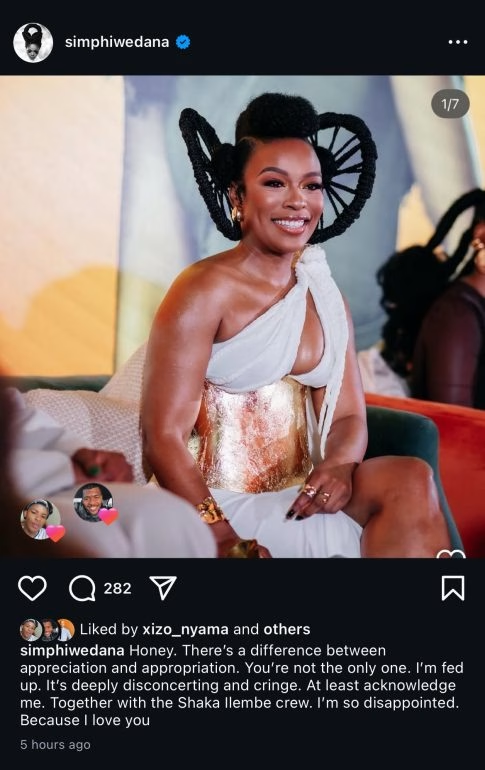
South African Twitter was set ablaze this week after acclaimed singer and activist Simphiwe Dana shared – and then swiftly deleted – allegations of cultural appropriation against actress and philanthropist Nomzamo Mbatha. The deleted post, which many fans captured in screenshots before it vanished, has left social media users divided, sparking heated conversations around ownership, identity, and the blurry lines between inspiration and imitation in South African culture.
A Tension-Filled Post, Then Silence
Dana, known for her fierce advocacy of African identity and traditional expression, reportedly accused Mbatha of “using Xhosa cultural elements for clout” in a now-deleted post. While she didn’t mention Mbatha by name, social media detectives quickly linked the post to Nomzamo after comparing the singer’s previous statements with Mbatha’s recent promotional content — particularly a series of photos where the Shaka iLembe star was dressed in traditional Xhosa regalia.
The post read in part:
“It hurts when people turn our heritage into a costume. Especially when it’s trendy now, but was ignored when it was revolutionary.”
Within hours, Dana had taken the tweet down, but by then the digital firestorm had already begun.
Cultural Appropriation vs. Cultural Appreciation
The core of the controversy lies in a long-standing debate in South Africa and globally: What distinguishes cultural appropriation from cultural appreciation? Dana’s post suggests that public figures who are not deeply rooted in or do not openly identify with certain cultural backgrounds may be using those cultures’ symbols and traditions to advance their careers or brand identities.
Mbatha, who is Zulu by heritage, has never publicly claimed to be Xhosa. However, her recent work in film and advocacy often features elements from across South African cultures — a practice some see as nation-building and inclusive, while others view it as exploitative.
Public Reactions
Twitter and Instagram quickly lit up with opinions. Some supported Dana’s concerns, stating that artists and public figures should be more careful about the context and meaning behind traditional dress and symbolism.
“Simphiwe is not wrong. These symbols have deep meaning, and using them for Instagram likes feels off,” one user wrote.
Others, however, were quick to defend Nomzamo Mbatha.
“Nomzamo has done more to highlight our heritage on a global stage than many others. Let her celebrate African culture,” countered another.
Some fans criticized Dana for deleting the post, accusing her of trying to stir drama without taking accountability.
“Don’t drop bombs and disappear. If you said it, stand by it,” one comment read.
Nomzamo Mbatha: No Response Yet
As of Tuesday, Nomzamo Mbatha has not addressed the claims publicly. Her most recent Instagram post remains focused on promoting Shaka iLembe, a hit series that tells the story of King Shaka Zulu and features cross-cultural elements from across Southern Africa.
Mbatha has long been celebrated for her activism, education work, and elevation of African narratives in the media. She is a UNHCR Goodwill Ambassador and frequently speaks about the power of representation and identity in Africa’s creative industries.
Simphiwe Dana’s History of Advocacy
This isn’t the first time Simphiwe Dana has made headlines for her strong social and political stances. A vocal Pan-Africanist and proponent of indigenous knowledge systems, Dana has never shied away from calling out what she perceives as cultural erasure or misuse. Her body of work — both musical and intellectual — has consistently centered on celebrating Black identity, heritage, and resistance.
In previous interviews, Dana has spoken about how Black South African artists are often pressured to dilute their cultural expression in order to succeed in the mainstream. Some supporters believe her now-deleted post was a continuation of that argument.
Larger Questions for South African Entertainment
The incident has prompted broader reflection on how South African celebrities navigate culture in the public eye, especially in a post-apartheid society where representation, healing, and cultural ownership remain sensitive topics.
As media attention grows and the local entertainment industry becomes increasingly global, the pressure to use traditional culture as visual branding has intensified. But with that comes responsibility — and clearly, scrutiny.
Whether Simphiwe Dana’s tweet was a moment of frustration, a misunderstood critique, or a necessary provocation, one thing is clear: South Africans are watching their cultural icons closely. Conversations around authenticity, heritage, and respect are not just happening in museums and academia anymore — they’re playing out in real-time, online, for millions to witness.
While Nomzamo Mbatha remains silent on the matter, and Dana has deleted her post, the incident continues to ripple through public discourse. Perhaps it serves as a reminder that in the age of influence, culture is not just content — it’s identity.
