
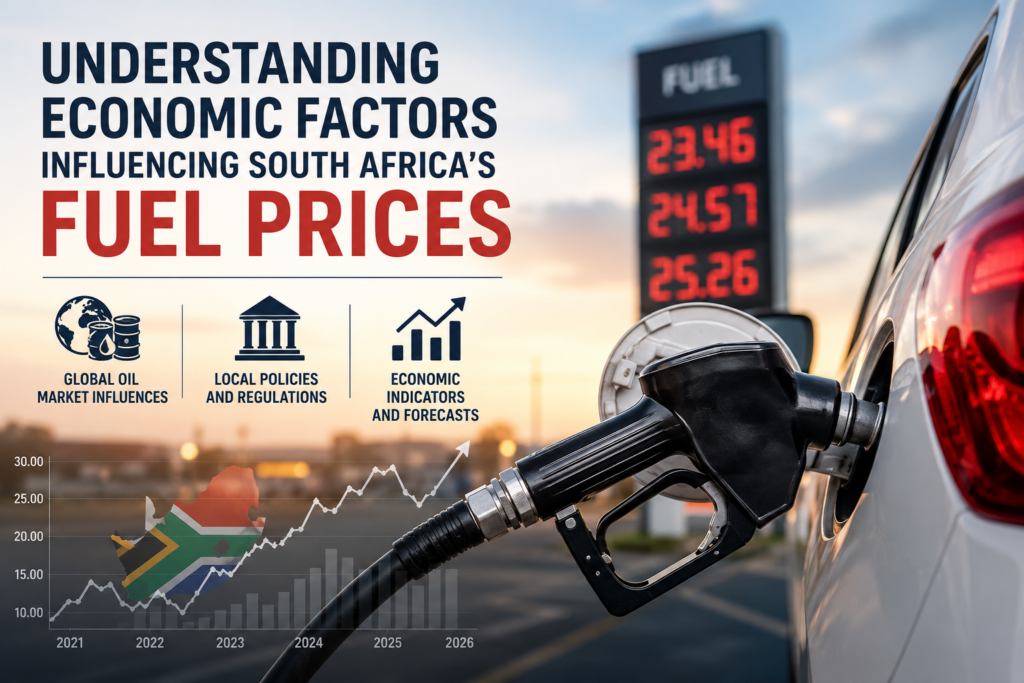
Supply and Demand Dynamics Understanding Economic Factors Influencing South Africa’s Fuel Prices
The Economic Factors Behind Rising Fuel Prices in South Africa
Learn how South Africa exchange rates, government policies, and economic indicators influence fuel prices in South Africa. Explore key factors shaping petrol and diesel costs.
Why Do Fuel Prices Change in South Africa?
Fuel prices affect almost every aspect of South Africa’s economy, from transport and food costs to business operations and household budgets. Whether you’re filling up your car or managing a logistics fleet, understanding what drives fuel price fluctuations can help you make informed financial decisions.
South Africa’s fuel prices are influenced by a combination of international market conditions, local regulations, currency movements, and broader economic trends.
Global Oil Market Influences
Crude Oil Prices
The most significant factor affecting South Africa’s fuel prices is the global price of crude oil. Since South Africa imports a large portion of its crude oil requirements, international oil market fluctuations directly impact local fuel costs.
When global demand for oil increases, prices tend to rise. Conversely, economic slowdowns, reduced demand, or increased production can push prices lower.
Major oil-producing regions and organizations such as Organization of the Petroleum Exporting Countries play a crucial role in determining global supply levels, which influence oil prices worldwide.
Geopolitical Events
Political instability, conflicts, sanctions, and disruptions in major oil-producing regions can create supply concerns, often resulting in higher oil prices.
Examples include:
- Conflicts in the Middle East
- Trade disputes between major economies
- Production cuts by oil-exporting nations
- Natural disasters affecting oil infrastructure
These events can quickly influence international oil prices and subsequently South African fuel prices.
Global Demand Trends
Economic growth in major economies such as China, United States, and India can significantly impact global fuel demand.
Strong industrial activity and increased travel generally lead to higher demand for petroleum products, contributing to rising prices.
Exchange Rate Impact
The Rand-Dollar Relationship
One of the most important local factors affecting fuel prices is the exchange rate between the South African Rand and the US Dollar.
Since oil is traded internationally in US Dollars, a weaker Rand means South Africa pays more for imported fuel products, even if global oil prices remain unchanged.
For example:
- Strong Rand = Lower fuel import costs
- Weak Rand = Higher fuel import costs
Currency volatility can therefore have a substantial impact on monthly fuel price adjustments.
Foreign Investment and Market Sentiment
Investor confidence, economic performance, political stability, and global financial conditions can influence the strength of the Rand.
Factors that may weaken the currency include:
- Lower economic growth
- Rising government debt
- Political uncertainty
- Global risk-off market conditions
When the Rand weakens, fuel prices often rise.
Local Policies and Regulations
Government Taxes and Levies
A significant portion of South Africa’s fuel price consists of taxes and levies imposed by government.
These include:
- General Fuel Levy
- Road Accident Fund Levy
- Customs and Excise Duties
- Other regulatory charges
Changes to these levies can affect the final price motorists pay at the pump.
Fuel Price Regulation
Unlike some countries where fuel prices are determined solely by market forces, South Africa regulates fuel prices through a structured pricing system.
The Department of Mineral Resources and Energy calculates monthly fuel price adjustments based on:
- International petroleum prices
- Exchange rate movements
- Distribution and transportation costs
- Wholesale and retail margins
This system aims to provide transparency and consistency in fuel pricing.
Infrastructure and Logistics Costs
Transporting fuel across South Africa requires extensive infrastructure, including pipelines, storage facilities, and road transport networks.
Higher operating costs, maintenance expenses, and logistical challenges can contribute to fuel price increases over time.
Economic Indicators and Forecasts
Inflation
Fuel prices and inflation are closely linked.
When fuel prices increase:
- Transportation costs rise
- Food distribution becomes more expensive
- Manufacturing costs increase
- Consumer prices often rise
This can contribute to higher inflation across the economy.
Interest Rates
Higher fuel prices can influence inflation, which may affect decisions by the South African Reserve Bank regarding interest rates.
If inflation rises significantly, policymakers may increase interest rates to control price pressures.
Economic Growth
Economic growth affects fuel demand throughout the country.
Growing economies typically experience:
- Increased business activity
- Higher transport demand
- Greater consumer spending
- Increased industrial production
These factors can contribute to higher fuel consumption and potentially influence pricing trends.
Future Outlook for South African Fuel Prices
Looking ahead, several factors are expected to shape fuel prices in South Africa:
- Global oil supply and demand dynamics
- The strength of the South African Rand
- Inflation trends
- Government fiscal policies
- Growth in renewable energy adoption
- Electric vehicle adoption rates
- Geopolitical developments
While short-term fluctuations are difficult to predict, monitoring these key indicators can help consumers and businesses better anticipate fuel price movements.
Frequently Asked Questions
Why are fuel prices so high in South Africa?
Fuel prices are influenced by global oil prices, exchange rates, taxes, levies, and local distribution costs.
Does the Rand affect fuel prices?
Yes. A weaker Rand generally increases fuel import costs because oil is purchased in US Dollars.
Who determines fuel prices in South Africa?
Fuel prices are regulated by the South African government through the Department of Mineral Resources and Energy using a monthly adjustment mechanism.
How often do fuel prices change?
Fuel prices in South Africa are typically adjusted monthly based on international fuel prices and exchange rate movements.
Can fuel prices decrease?
Yes. Lower global oil prices, a stronger Rand, or reduced taxes and levies can contribute to lower fuel prices.
