
March and March Campaigns: Immigration Reform and Citizen Advocacy in South Africa
March and March Campaigns
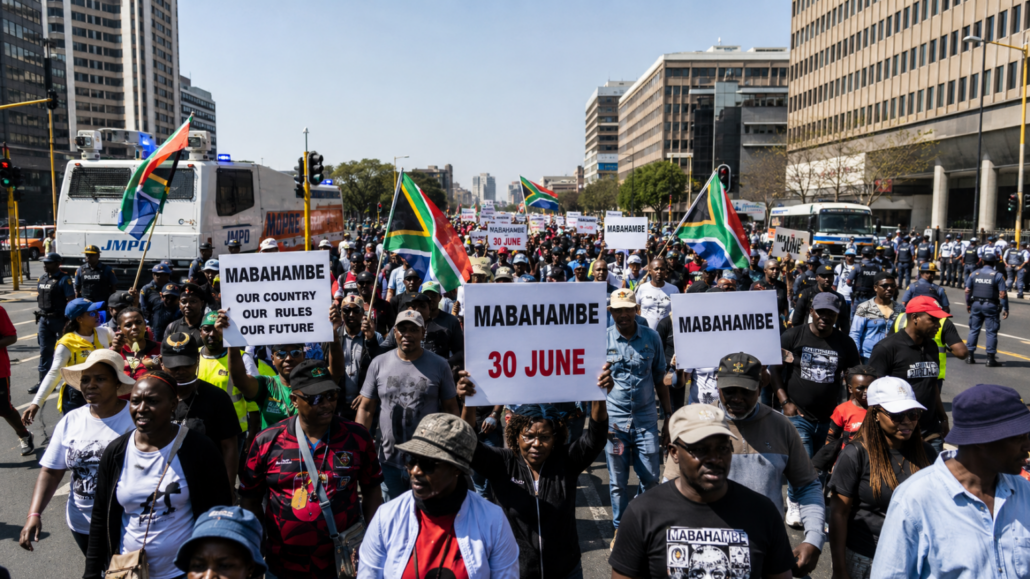
March and March Campaigns has emerged as a significant force in South Africa’s immigration policy debate, transitioning from grassroots mobilization to active state accountability monitoring. The organization reports having mobilized over 50,000 citizens across all 9 provinces, organizing more than 100 events and generating substantial media coverage. The movement’s current focus emphasizes ensuring government compliance with promised policy changes, following what it describes as successful citizen-led pressure on national leadership.
The coalition, comprising over 20 organisations, insists its campaign is about enforcing the law and protecting citizen interests, rather than targeting foreign nationals. However, its rise has sparked intense national debate about immigration enforcement, state capacity, and the boundaries of citizen action in a democratic society.
Key Demands and Stated Position
The movement has articulated a clear set of demands that guide its campaigns and demonstrations:
- Stricter border controls and increased funding for the Border Management Authority to address porous borders.
- Acceleration of deportation processes for undocumented foreign nationals to relieve strain on public infrastructure.
- Reserving opportunities in the township economy for South African citizens, addressing employment competition concerns.
- Accountability for corrupt police and immigration officials who facilitate illegal immigration.
- Extradition of foreign prisoners to their home nations to reduce the financial burden on South African correctional services.
The movement’s leader, Jacinta Ngobese-Zuma, has repeatedly stated that all protests will be peaceful and non-violent. She has also emphasized that the March and March Campaigns will not take responsibility for any violence that may occur, arguing that maintaining public order is the government’s constitutional duty. The group has warned that the campaign will escalate beyond June 30 if the government fails to act on their demands.
Active Campaigns and Initiatives
National Government Response & Accountability
March and March claims that intense citizen mobilization has prompted a response from the highest office, including a presidential address. This campaign is currently focused on monitoring state execution of promised policy overhauls to ensure deep structural changes in immigration enforcement. The movement views this as a critical phase, transitioning from protest to oversight.
Local Government & Enforcement Mobilization
This “on the ground” initiative encourages Mayors, MMCs, and Local Councilors to enforce local bylaws. It includes efforts to track police and immigration officer deployments on targeted community security sweeps. The campaign aims to ensure that local authorities are actively involved in immigration enforcement, addressing citizen concerns at the community level.
Mass Illegal Immigration Deportation Campaign
A dedicated push supporting state mechanisms for the systematic deportation of undocumented immigrants. The campaign aims to relieve strain on South African public infrastructure by fast-tracking deportation tracks. This includes healthcare, education, and social services, which the movement argues are overburdened by undocumented migration.
Foreign Prisoner Extradition Drive
This legal action focuses on accelerating inmate transfers to ensure South African correctional services do not bear the financial burden for foreign nationals. The goal is to encourage prisons to extradite foreign prisoners back to their home nations to achieve taxpayer relief and reduce overcrowding in correctional facilities.
Archive of Foundational Campaigns
The movement’s foundational campaigns (2023-2026) helped shape the current policy discussions and build the organizational framework for its current initiatives:
| Campaign | Period | Focus |
|---|---|---|
| Border Security Reform Initiative | 2025-2026 | Advocated for enhanced border control measures to protect national security. |
| Citizen Employment Protection | 2025 | Focused on policies prioritizing South African citizens in job markets. |
| #PutSouthAfricansFirst | 2025 | A major awareness campaign highlighting citizen concerns about immigration. |
| Public Services Accessibility | 2025 | Campaigning to ensure healthcare, education, and social benefits prioritize citizens. |
| Community Safety & Crime Prevention | 2024-2025 | Addressed citizen concerns about crime and immigration-related safety. |
| Education Resources Protection | 2023-2024 | Raised awareness about education capacity challenges and advocated for citizen-first policies in schools. |
| National Demonstration Tours | 2024 | Series of peaceful marches across multiple provinces bringing citizen voices to the national stage. |
| Policy Submission Initiative | 2024-2025 | Submitted detailed policy recommendations to Parliament and government officials. |
| Community Consultation Forums | 2024-Present | Ongoing grassroots engagement gathering direct citizen input on immigration impacts. |
June 30 Demonstrations: What to Expect
The movement’s central focus is the June 30, 2026 deadline for undocumented immigrants to “self-deport,” a date it has set for major nationwide demonstrations.
Planned Actions
- Marches are expected in multiple provinces, including Gauteng, KwaZulu-Natal, the Western Cape, and the Eastern Cape, which have been identified as potential flashpoints.
- In Pretoria, protesters plan to gather at Church Square and march to the Sunnyside Police Station.
- The movement has called for a national shutdown if the government fails to meet its demands.
Legal Challenges
- The movement has defied a ban by the eThekwini Municipality, which refused permission for a protest on security grounds.
- March and March leaders have vowed to proceed, citing their constitutional right to protest.
- Legal battles over protest permissions are ongoing in several municipalities.
Government Response and Security Measures
The government has mounted a significant response, rejecting the June 30 deadline and warning against vigilante actions.
Massive Security Operation
- Acting Police Minister Firoz Cachalia announced that policing the protests will cost over R600 million, with funds redirected from community policing.
- The South African Police Service (SAPS) is on high alert, with deployments planned across all identified flashpoints.
- The South African National Defence Force (SANDF) may be deployed if necessary to maintain public order.
Calls for Calm
- President Cyril Ramaphosa has urged South Africans not to take action against foreign nationals and warned that any incitement of violence or disorder will not be tolerated.
- The government has stressed that June 30 is not a national shutdown and that all citizens should go about their daily activities.
- The Department of Home Affairs has reiterated that immigration enforcement remains a state function and warned against illegal actions.
Official Rejection of the Deadline
- The government has formally rejected the June 30 deadline, stating that immigration matters must be handled through established legal processes.
- Officials have emphasized that vigilante action undermines the rule of law and could have serious consequences for social stability.
Broader Context: A Crisis of Authority
Analysts view the rise of groups like March and March as a symptom of deeper state failures:
- Porous borders that allow undocumented migration to continue unchecked.
- High unemployment rates that fuel citizen frustration and competition for scarce resources.
- Weak enforcement of immigration laws, creating a perception that the state is unwilling or unable to act.
- Erosion of trust in state institutions, leading citizens to take matters into their own hands.
Rule of Law Concerns
- A key concern is that private groups are beginning to exercise functions (like deportations) that are reserved exclusively for the state.
- This poses a challenge to the rule of law and raises questions about state authority and capacity.
- Political opportunism, particularly ahead of the 2026 local government elections, is seen by some as fueling the movement’s rise.
March and March in Numbers
| Metric | Value |
|---|---|
| Citizens Mobilized | 50,000+ |
| Events Organized | 100+ |
| Provinces Reached | 9 |
| Media Mentions | 1,000+ |
| Active Campaigns | 4 |
| Archived Campaigns | 13 |
| Coalition Members | 20+ organisations |
How to Get Involved
Join Active Campaigns
Individuals interested in participating can join active campaigns directly through the official March and March platform. The organization welcomes volunteers and supporters across all provinces.
Download the Mobile App
The organization encourages supporters to download their mobile app for real-time campaign updates and event notifications, ensuring participants stay informed about ongoing enforcement and accountability initiatives.
Attend Community Consultations
Ongoing community consultation forums provide opportunities for citizens to voice concerns, share experiences, and contribute to policy recommendations.
Participate in Demonstrations
The movement has announced a series of nationwide demonstrations leading up to and following the June 30 deadline, with details available through official channels.
Follow Official Channels
For the latest updates, individuals are encouraged to follow March and March’s official website and social media platforms for accurate and timely information.
Frequently Asked Questions
Q: Is March and March a political party?
A: No. The movement claims to be apolitical, though it has reportedly held talks with several political parties, including the uMkhonto weSizwe (MK) Party.
Q: What is the June 30 deadline?
A: The movement has set June 30, 2026, as a deadline for undocumented immigrants to “self-deport” and has called for nationwide demonstrations on that date.
Q: Does the government support these campaigns?
A: The government has formally rejected the June 30 deadline and warned against vigilante actions, stating that immigration enforcement is a state function.
Q: Are the protests peaceful?
A: The movement’s leadership has repeatedly stated that all protests will be peaceful and non-violent, though security concerns remain.
Q: How can I verify campaign information?
A: For accurate and up-to-date information, consult the official March and March website and mobile app, and cross-reference with independent news sources.
