
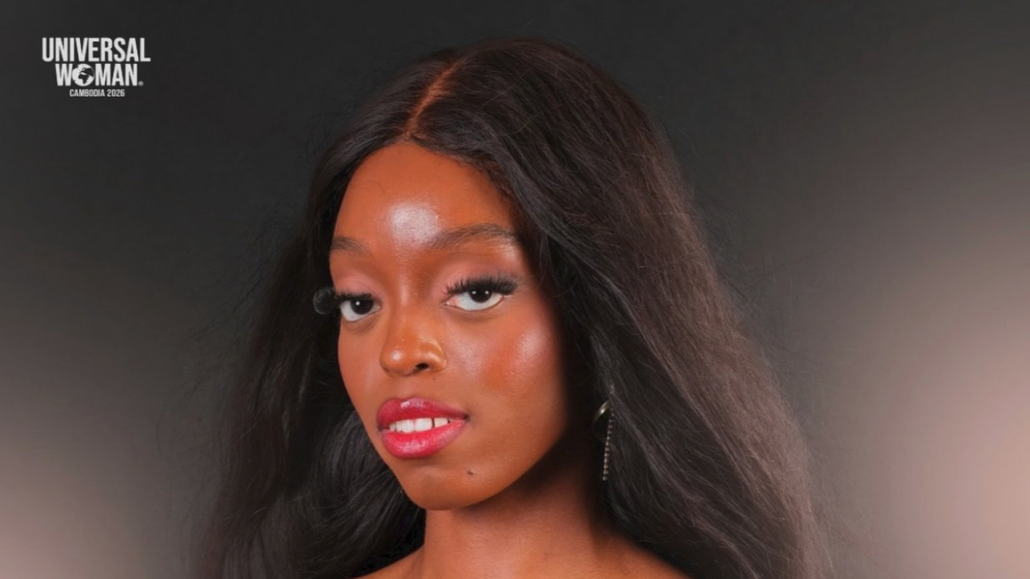
Rebecca Afolabi Faces Backlash Over Representing Great Britain
Rebecca Afolabi is facing online backlash after being selected to represent Great Britain at the 2026 Universal Woman international beauty pageant, with her Nigerian heritage becoming part of the debate.
Afolabi is officially listed as Great Britain’s representative for Universal Woman 2026, according to the pageant’s current voting platform.
But her selection has become the subject of a wider conversation online about race, nationality, identity and what it means to represent a country while having roots elsewhere.
Some social-media posts have questioned Afolabi’s eligibility to represent Great Britain because of her Nigerian background. Others have gone beyond criticism of the pageant and directed racist and personal abuse towards Afolabi herself.
The claims circulating online should be treated as social-media commentary rather than established fact.
Who Is Rebeca Afolabi?
Afolabi is a British-Nigerian beauty queen who has lived in London for most of her life.
In a 2025 interview, Afolabi said she was born in the United States, lived in Nigeria between the ages of eight and 12, and has spent the longest period of her life in London. She also revealed that she works as a programmatic manager, has a psychology degree and creates beauty and lifestyle content online.
Her pageant career began in 2023, and she previously held the Miss Ebony Ambassador UK title before winning the Universal Woman Great Britain competition.
Afolabi has also spoken about what it means to compete as a woman of colour in British pageantry.
“Will they see my colour before they see me?”
That was the self-doubt she described experiencing while competing, before ultimately winning the Great Britain title.
Afolabi Is Great Britain’s Official Universal Woman Candidate
Whatever opinions are being expressed online, Afolabi’s representation of Great Britain is not simply a social-media claim.
The official Universal Woman voting page currently lists Great Britain – Rebecca Afolabi among the contestants competing for the 2026 title.
She appears alongside representatives from countries including Nigeria, South Africa, Ghana, Kenya, Zambia, Canada and the United States.
That makes the current controversy particularly interesting because Universal Woman is an international competition involving contestants with diverse cultural and national backgrounds.
The Nigerian Heritage Debate
A significant part of the online reaction centres on Afolabi’s Nigerian heritage.
Criticism of someone’s nationality, ancestry or ethnicity is different from questioning the rules of a pageant.
There is currently no evidence in the sources reviewed that Universal Woman has disqualified Afolabi or questioned her eligibility to represent Great Britain.
In fact, the organisation continues to list her as Great Britain’s candidate.
Afolabi has also never presented her Nigerian heritage as something separate from her British identity.
Her own account of her upbringing reflects a multicultural background: she was born in the United States, spent part of her childhood in Nigeria and grew up largely in London.
For people with similar backgrounds, those identities do not necessarily compete with one another.
When Pageant Criticism Turns Personal
The conversation has also exposed a more uncomfortable side of online commentary.
Some posts discussing Afolabi have moved from debating whether she should represent Great Britain to attacking her appearance and using derogatory language towards Nigerians and Yoruba people.
Those statements are not evidence that an entire nationality or ethnic group shares the behaviour attributed to individuals in viral social-media posts.
They are also not a reasonable measure of Afolabi’s qualifications as a pageant contestant.
A person’s ethnicity does not determine their criminality, character or ability to represent a country.
The Chidimma Adetshina Comparison
The backlash has also prompted comparisons online with Chidimma Adetshina, whose participation in South African pageantry previously triggered a major public debate over nationality, identity and belonging.
The circumstances surrounding the two women are different.
But the comparison reflects a broader question increasingly appearing in African and international pageantry:
Who gets to represent a country?
In an increasingly multicultural world, national identity does not always fit neatly into one ethnicity or ancestry.
A person can have Nigerian parents, British citizenship, a British upbringing and still maintain a strong connection to their family’s country of origin.
Afolabi’s story illustrates that complexity.
Afolabi Has Also Used Her Platform Beyond Pageantry
Her pageant journey is not limited to competitions and appearances.
Afolabi told The Sun Nigeria that she runs the Queen Becca Foundation, which works with young people in both London and Nigeria.
She said the foundation had raised money for food donations to orphanages, provided period products to young girls and sponsored three girls to continue their secondary education in Ilesha, Osun State.
That work forms part of the public identity she has built around her pageant career.
It also makes the focus on her Nigerian heritage more complicated: Afolabi has publicly embraced both her British life and her Nigerian connections.
Rebeca Afolabi’s Universal Woman Journey
For now, Afolabi remains Great Britain’s official contestant for Universal Woman 2026, with her name appearing on the competition’s current voting platform.
The online backlash has turned what might otherwise have been a straightforward pageant story into a much larger conversation about race, identity and belonging.
Afolabi’s selection raises a question that goes beyond beauty pageants:
Does representing a country require having only one cultural identity?
For a growing number of people living between cultures, the answer is increasingly complicated.
And for Afolabi, the message from Universal Woman is currently clear: she is representing Great Britain.
The debate happening online is about whether everyone is prepared to accept that.
