
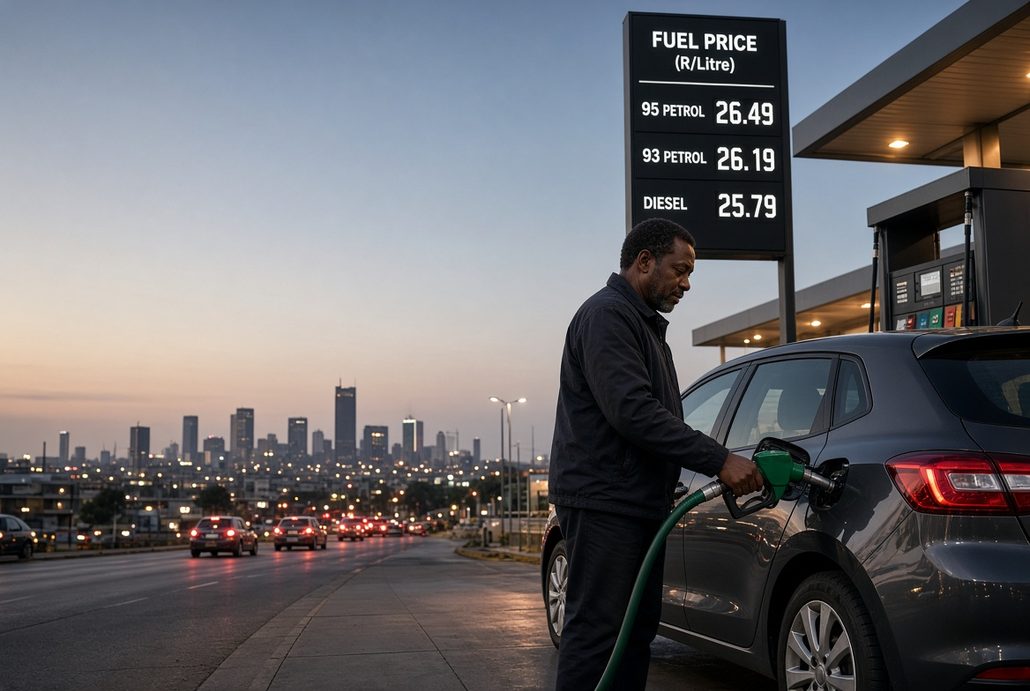
South Africa Petrol Prices September 2026: New Rates
South African motorists are set for another increase at the pumps, with both 93 and 95 petrol rising by R1.34 per litre from Wednesday, 2 September 2026.
The Department of Mineral and Petroleum Resources has confirmed the new South Africa petrol prices for September 2026, bringing another significant increase for motorists after fuel prices already experienced major volatility this year.
The new prices come into effect from Wednesday, 2 September 2026.
New Petrol Prices in South Africa
The increase applies to both grades of petrol.
| Fuel | Inland | Coastal |
|---|---|---|
| 93 Petrol | R26.76/L | R25.97/L |
| 95 Petrol | R26.92/L | R26.05/L |
The official adjustment means motorists using either 93 or 95 petrol will pay R1.34 more per litre from September.
For motorists in Gauteng and other inland areas, 95 petrol will now cost R26.92 per litre.
For motorists in coastal areas, including much of the Western Cape, Eastern Cape and KwaZulu-Natal coastal regions, 95 petrol will cost R26.05 per litre.
Diesel Prices Also Jump
Diesel motorists are facing an even bigger increase.
The wholesale price of 0.05% diesel increases by R2.94 per litre, while 0.005% diesel increases by R3.15 per litre.
The September wholesale diesel prices are:
| Fuel | Inland | Coastal |
|---|---|---|
| Diesel 0.05% | R29.11/L | R28.24/L |
| Diesel 0.005% | R30.05/L | R28.79/L |
The diesel figures are wholesale prices, meaning the actual pump price can differ because diesel is not subject to the same retail price regulation as petrol.
How Much More Will a Tank Cost?
The R1.34 petrol increase can add up quickly.
For a 50-litre tank, the increase works out to:
50 × R1.34 = R67 more per fill-up.
For a 60-litre tank:
60 × R1.34 = R80.40 more per fill-up.
So a motorist filling a 60-litre petrol tank will spend roughly R80 more than they would have paid under the August petrol price, before taking account of any other changes in fuel consumption or driving habits.
Why Are Petrol Prices Increasing?
The major pressure came from higher international oil and petroleum product prices.
The average Brent crude price used in the latest calculation increased from $82.37 to $87.88 per barrel. The DMPR said geopolitical tensions, uncertainty around oil flows through the Strait of Hormuz, higher shipping costs and supply disruptions contributed to higher international product prices.
The stronger rand provided some relief.
The average rand-dollar exchange rate improved from R16.46 to R16.21 per US dollar, reducing the contribution of the exchange rate to the Basic Fuel Price. However, that relief was not enough to offset the increase in international petroleum prices.
What Is the Slate Levy?
Another factor behind the September increase is the slate levy.
A slate levy of 83.28 cents per litre will be included in the petrol and diesel price structures from 2 September. This represents an increase of 21.90 cents per litre from the previous 61.38 cents.
There is also a 4.9-cent-per-litre increase in the petrol price structure to accommodate a forecourt employee wage adjustment under the relevant Motor Industry Bargaining Council agreement.
When Do the New Petrol Prices Start?
The new fuel prices take effect on:
Wednesday, 2 September 2026.
Until then, motorists will continue paying the August fuel prices.
September 2026 Petrol Prices: Quick Answer
What is the new 95 petrol price in Gauteng?
R26.92 per litre.
What is the new 95 petrol price at the coast?
R26.05 per litre.
How much is petrol increasing?
Both 93 and 95 petrol increase by R1.34 per litre.
When do the new prices start?
Wednesday, 2 September 2026.
What is the new inland 93 petrol price?
R26.76 per litre.
What is the new coastal 93 petrol price?
R25.97 per litre.
For South African motorists, September is bringing another noticeable increase at the pumps — and the biggest pressure is being felt by diesel users, with the 0.005% wholesale diesel price moving above R30 per litre inland.
