
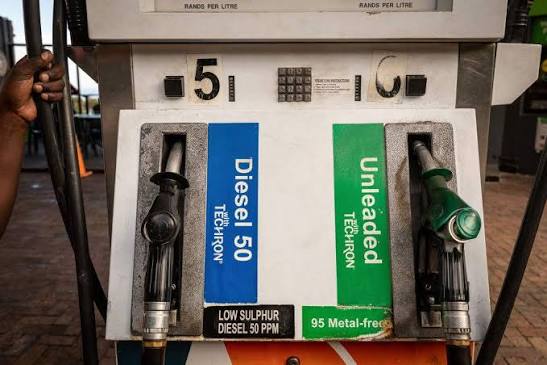
Diesel Price South Africa: September 2026 Increase
South African motorists and businesses are set for a painful increase in diesel prices from Wednesday, 2 September 2026, with the latest fuel-price adjustment pushing diesel up by almost R3 a litre.
The Department of Mineral and Petroleum Resources (DMPR) has confirmed the September fuel-price increases, with diesel rising significantly more than petrol.
For drivers and businesses that depend heavily on diesel, the increase could quickly add hundreds of rand to monthly fuel costs.
South Africa diesel prices for September 2026
The new prices take effect from 2 September 2026.
| Fuel | Inland | Coastal |
|---|---|---|
| Diesel 0.05% (500ppm) | R29.11/L | R28.24/L |
| Diesel 0.005% (50ppm) | R30.05/L | R28.79/L |
The inland wholesale price for 50ppm diesel has now moved above R30 per litre, while the 500ppm grade is just below R30. Coastal prices are lower.
It is important to note that these diesel figures are wholesale prices. The final price motorists pay at an individual service station can differ.
How much did diesel increase?
The September adjustment is substantial.
Diesel 500ppm increases by approximately R2.94 per litre, while 50ppm diesel increases by approximately R3.15 per litre.
That makes the diesel increase considerably larger than the R1.34 per litre increase for both grades of petrol.
For anyone filling a diesel vehicle regularly, that difference will be noticeable.
How much more will a diesel tank cost?
The easiest way to understand the increase is to look at how many litres you normally buy.
At an increase of around R3.15 per litre, the additional cost is roughly:
- 50 litres: R157.50 more
- 60 litres: R189 more
- 80 litres: R252 more
- 100 litres: R315 more
For a commercial vehicle using hundreds of litres every week, the additional cost can quickly become much larger.
Why did diesel prices increase so much?
South Africa’s fuel prices are adjusted monthly and are influenced by international oil prices, petroleum-product prices and the rand’s exchange rate against the US dollar.
For the September adjustment, international petroleum prices moved higher.
The official explanation shows that the average Brent crude oil price increased from $82.37 to $87.88 per barrel during the relevant review period.
The rand strengthened somewhat against the US dollar, which helped cushion the increase, but that was not enough to prevent a major rise in diesel prices.
Petrol is also going up
Diesel is taking the biggest hit, but petrol prices are also increasing from 2 September.
Both petrol grades increase by R1.34 per litre.
The new inland prices are:
- 93 Unleaded: R26.76/L
- 95 Unleaded: R26.92/L
At the coast, 95 unleaded rises to R26.05/L.
So while petrol motorists will also feel the increase, diesel users are facing a much larger jump.
What does the diesel increase mean for motorists?
For someone who uses a diesel car mainly for commuting, the immediate impact is straightforward: every tank becomes more expensive.
But the bigger impact could come from commercial transport.
Diesel is widely used by trucks, delivery vehicles, buses, agricultural machinery and other commercial equipment.
When diesel becomes significantly more expensive, businesses have to decide whether to absorb the additional cost or pass some of it on to customers.
That could eventually affect delivery fees and the price of some goods.
Could the diesel increase push up food prices?
It could add pressure, although it does not mean food prices will automatically increase by a specific amount.
Diesel is used throughout parts of the agricultural and logistics chain.
Farm equipment, trucks and distribution vehicles all contribute to getting products from producers to consumers.
Higher fuel costs can therefore increase operating costs for businesses involved in transporting and producing goods.
For consumers already dealing with higher living costs, another increase in transport-related expenses is unwelcome news.
Why the R30 diesel price matters
The inland 50ppm diesel wholesale price reaching R30.05 per litre is an important milestone.
However, motorists should not assume that every diesel station will charge exactly R30.05.
The official figure is a wholesale price, and the final retail price can vary between service stations.
Where you fill up can therefore make a difference, particularly for motorists who regularly cover long distances.
When do the new diesel prices start?
The new fuel prices take effect from Wednesday, 2 September 2026.
The DMPR announced the adjustment on 31 August following the monthly review of local and international factors affecting South Africa’s fuel prices.
That means motorists should expect the higher prices when the September adjustment comes into effect.
The bottom line
South Africa’s diesel price is heading sharply higher in September.
From 2 September, the inland wholesale price rises to R29.11 per litre for 500ppm diesel and R30.05 per litre for 50ppm diesel. At the coast, the corresponding prices are R28.24 and R28.79 per litre.
For an ordinary diesel motorist, the immediate impact will be a more expensive tank of fuel.
For truck drivers, delivery businesses and companies operating large diesel fleets, the increase could be considerably more significant.
With diesel rising by roughly R3 a litre in one month, South Africans will be watching international oil prices and the rand closely to see where fuel prices go next.
