
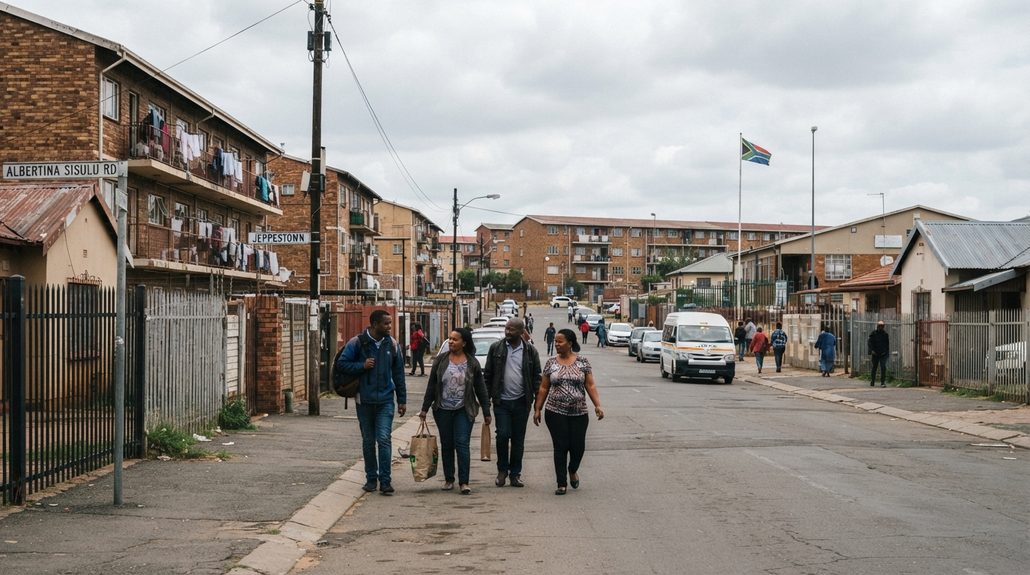
South Africa Petition Calls for Asylum Seekers to Be Moved Out of Residential Communities
A new Change.org campaign is calling for government-managed accommodation for asylum seekers, putting immigration enforcement, community safety and South Africa’s refugee policy back in the spotlight.
A petition calling for asylum seekers to be removed from residential communities is gaining attention online as South Africa confronts renewed tensions over immigration, public safety and the administration of its asylum system.
Titled Remove asylum seekers from residential communities, the campaign was created by Thokozani Oscar Madike on 10 October 2026. It calls on the government to relocate asylum seekers from residential neighbourhoods to dedicated, government-managed facilities where their claims could be processed and their circumstances assessed. Read the petition on Change.org.
The proposal comes at a particularly sensitive moment. South Africa has experienced fresh anti-immigrant protests and violence in Johannesburg and Durban, while the Department of Home Affairs has been dealing with the consequences of a recent Constitutional Court ruling on access to the asylum application process.
The petition raises a question that extends beyond its signature count: how should South Africa balance community concerns and immigration enforcement with its legal obligations to people seeking international protection?
What Does the Petition Want the Government to Do?
The campaign argues that residential communities are experiencing pressure linked to weaknesses in immigration administration and inadequate oversight. Its proposed solution is to move asylum seekers into designated facilities managed by the state.
According to the petition, these facilities could provide structured accommodation, closer monitoring, language classes, job training and counselling. The campaign also calls for more thorough and transparent asylum processing.
Its central argument is that government should establish a more controlled system for accommodating people while determining whether their claims for protection are legitimate.
However, the petition’s assertions about crime and the effects of asylum seekers on residential communities should be understood as the campaign’s claims, not independently verified findings. The petition does not, by itself, establish that asylum seekers as a group are responsible for increased crime or pressure on public services.
Why Is the Petition Emerging Now?
The campaign follows a period of heightened tension around immigration enforcement and access to asylum services.
On 9 October 2026, the Department of Home Affairs announced that it had withdrawn a directive issued on 28 September concerning the intake of asylum applications. The department said the attempt to implement a Constitutional Court judgment had overwhelmed refugee reception offices within days, placed officials at risk and created serious public-order concerns.
The department said it would develop a new operational approach to comply with the court’s ruling while addressing those difficulties.
The ruling, delivered on 7 July in the Scalabrini Centre of Cape Town matter, concerned provisions governing access to the asylum application process. It did not automatically grant refugee status or permanent residence to everyone seeking to enter the process.
The developments have intensified an already difficult public debate about border management, asylum applications and the government’s capacity to process claims efficiently.
Can South Africa Move Asylum Seekers Into Designated Facilities?
South Africa’s current approach differs from that of countries that primarily accommodate refugees in camps. The United Nations High Commissioner for Refugees says most refugees and asylum seekers in South Africa live in urban communities rather than designated camps.
According to UNHCR, South Africa hosted more than 167,000 refugees and asylum seekers in 2025. The organisation also identifies documentation challenges, xenophobia and access to services among the issues affecting displaced people in the country.
This urban settlement model is an important consideration when assessing the petition’s proposal. Moving people into designated facilities would require decisions about funding, accommodation capacity, access to legal assistance and essential services, as well as the effect on people’s ability to work and support their families.
The Refugees Act provides for designated areas or centres for the temporary reception and accommodation of asylum seekers or refugees in the specific circumstances of a large-scale influx. Whether and how a broader relocation policy could operate would require careful legal and practical assessment.
The existence of that provision does not, on its own, establish that the government can automatically remove all asylum seekers from ordinary residential neighbourhoods.
Community Safety and the Rights of Asylum Seekers
For residents who feel that local services, housing and public safety are under pressure, the petition offers a demand for stronger government intervention. Those concerns deserve serious examination, supported by reliable information and effective public administration.
But immigration status alone does not establish that an individual has committed a crime. Allegations of criminal conduct must be investigated on their own evidence, rather than attributed to an entire nationality or immigration category.
Asylum seekers are also not all in the same legal position as undocumented migrants or people whose applications have been rejected. An asylum seeker is seeking protection while their claim is considered; a recognised refugee has been granted protection under the applicable legal framework.
Any relocation proposal would therefore need to distinguish between individual cases and provide appropriate safeguards for people who are entitled to seek asylum.
The wider policy challenge is to improve immigration administration, ensure that claims are assessed efficiently, enforce the law and address credible public-safety concerns without disregarding constitutional protections.
What Happens Next?
The petition calls for government action, but its publication does not mean that the government has adopted its proposal. Its impact will depend on public support, engagement with policymakers and whether the suggested approach can be implemented lawfully and sustainably.
The immediate questions for government include how asylum applications will be processed following the withdrawn directive, how refugee reception offices will manage demand and what measures can address tensions in affected communities.
Whether dedicated accommodation should form part of a wider reform remains a question for public debate and policy assessment. Any proposed change would need to consider the cost of implementation, the capacity of state facilities, legal requirements and the consequences for both host communities and people seeking protection.
Read the petition: Remove asylum seekers from residential communities on Change.org.
This article reports on the petition and the surrounding policy debate. The petition’s allegations are attributed to its author and should not be interpreted as independently established evidence.
